The Garden
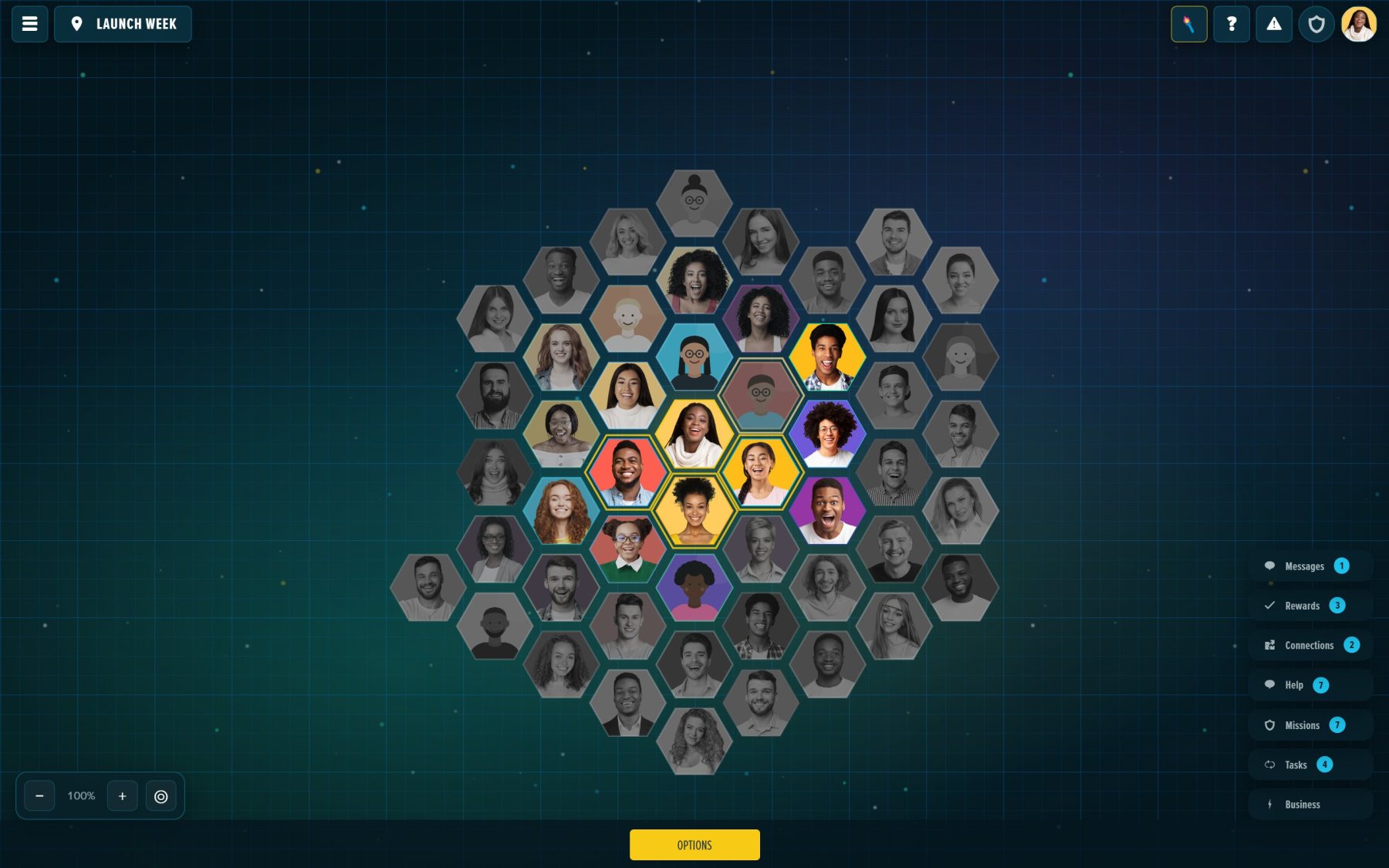
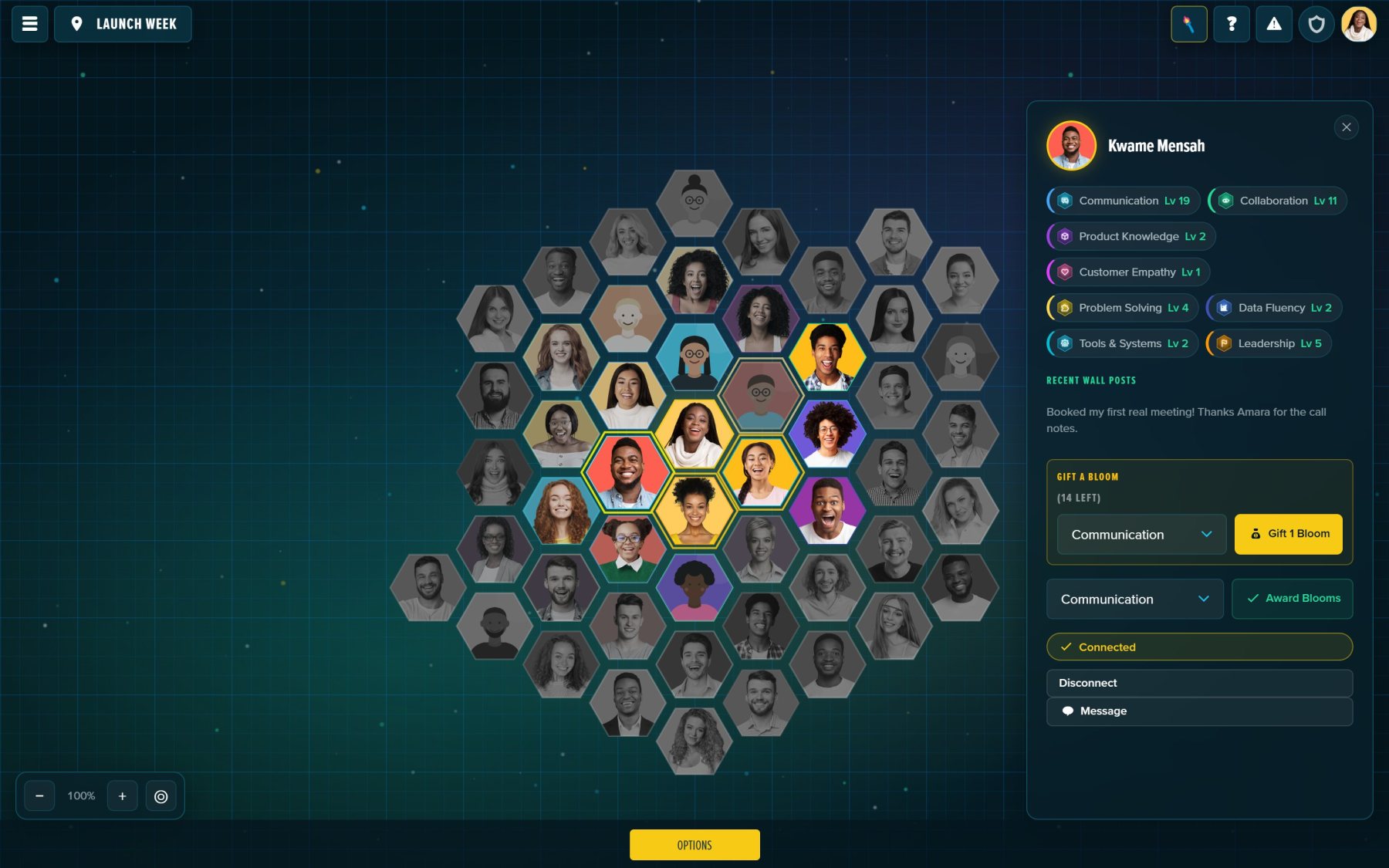
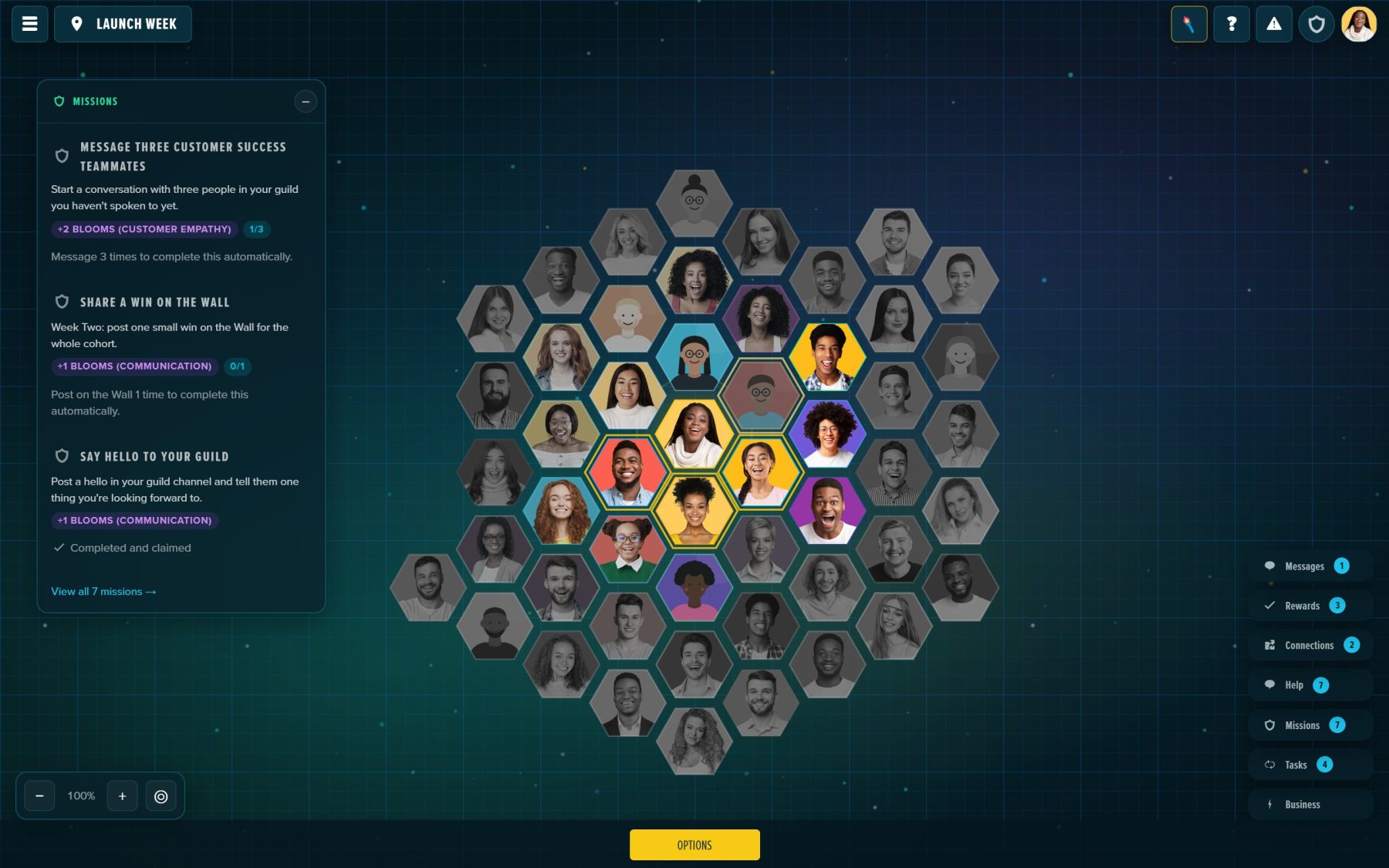
The Journey asks “how am I growing?” The Garden asks “who am I growing with?” It's a social layer inside every BLUERABBIT adventure where each player is a hexagon, every relationship is earned through real interaction, and the ones you neglect visibly wither.
Gamification rewards the work nobody sees you do alone.
Most gamified programs, mine included, reward completion: finish the module, earn the XP. That works for knowledge. It does nothing for what actually makes a cohort work: people helping each other, asking good questions, knowing who to go to.
In a real corporate cohort of 237 people across 21 guilds, nobody knew who could help with what. Peer help, networking and soft skills were the most valuable things happening, and none of them showed up anywhere in the product.
The brief I gave myself: don't let players choose their relationships. Nourish them through real interaction, and make the result visible.
It started as a honeycomb for a bank.
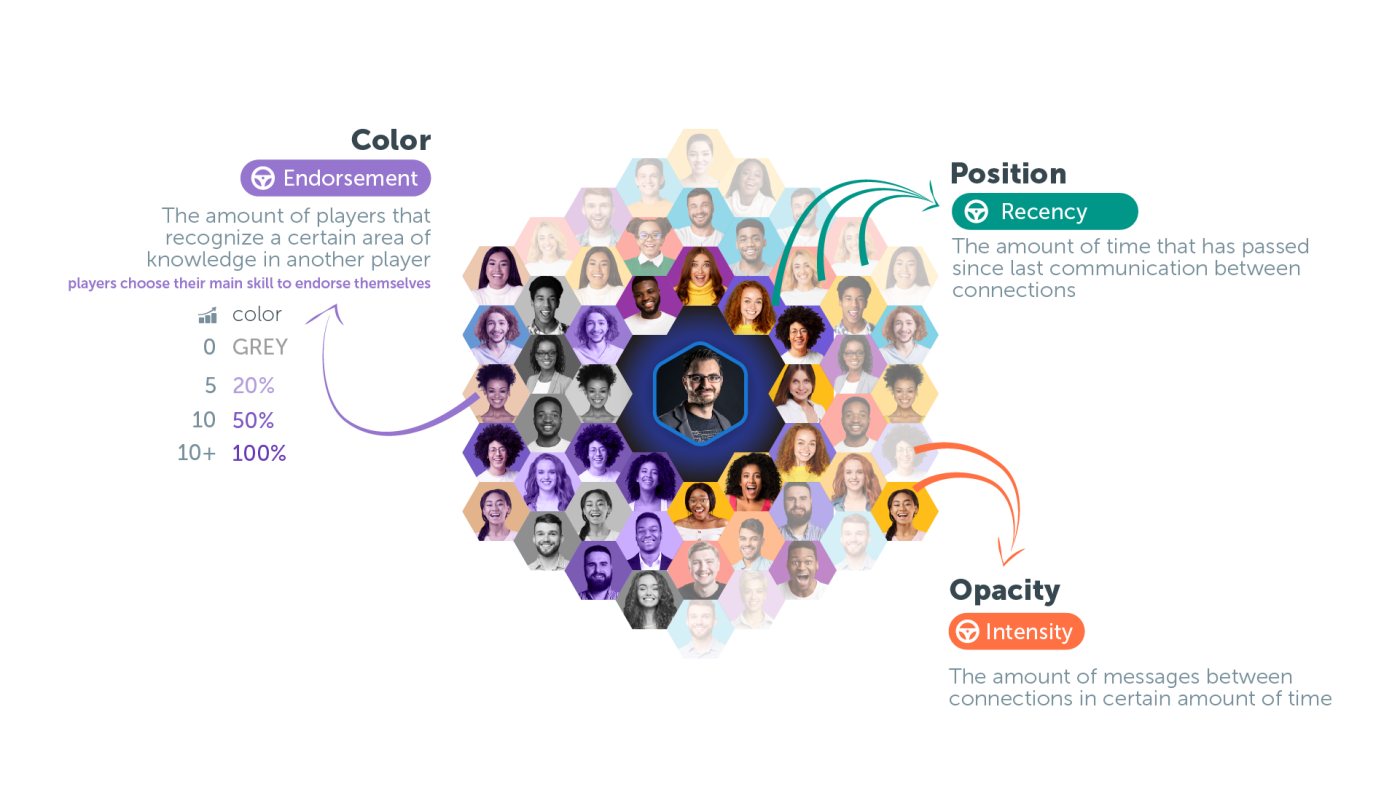
In 2021 I designed a concept called The Hive for Standard Bank's architecture team. Everyone was a hexagon. Color showed how many peers endorsed you in an area, position showed how recently you'd talked, and opacity showed how much.
The prototype never shipped, but the question stayed with me. Five years later, the Garden is The Hive's answer, rebuilt on real data and with most of the original mapping changed after testing.
Derived, not declared.
The first build placed people in Dunbar's circles (intimate, close, friends, acquaintances) with a manual “Move to…” picker so players could sort their own network. It shipped on July 17.
It came out on July 19. Letting people declare their relationships turned the map into an opinion, and opinions don't change behavior. My note to the build was blunt: remove any logic about Dunbar's circles; we have our own model.
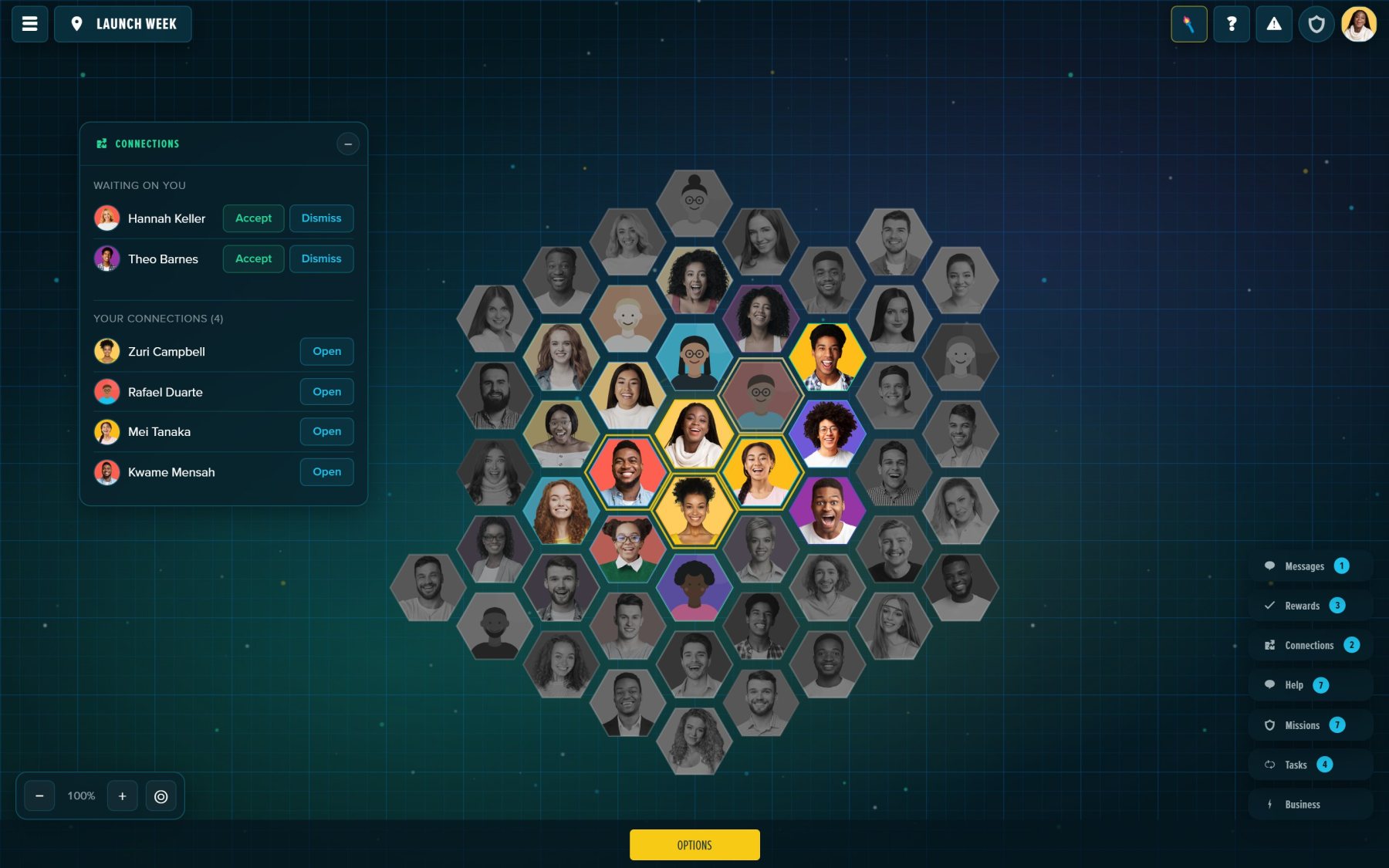
From then on, the rule was that everything on the map is earned. There is exactly one exception: a Connection, a mutual “we know each other,” is the only thing you can state rather than earn. It gets a gold halo and sits in the innermost ring. It still withers if you ignore it.
Relationships are derived from interaction, never declared by preference.
Reading the map.
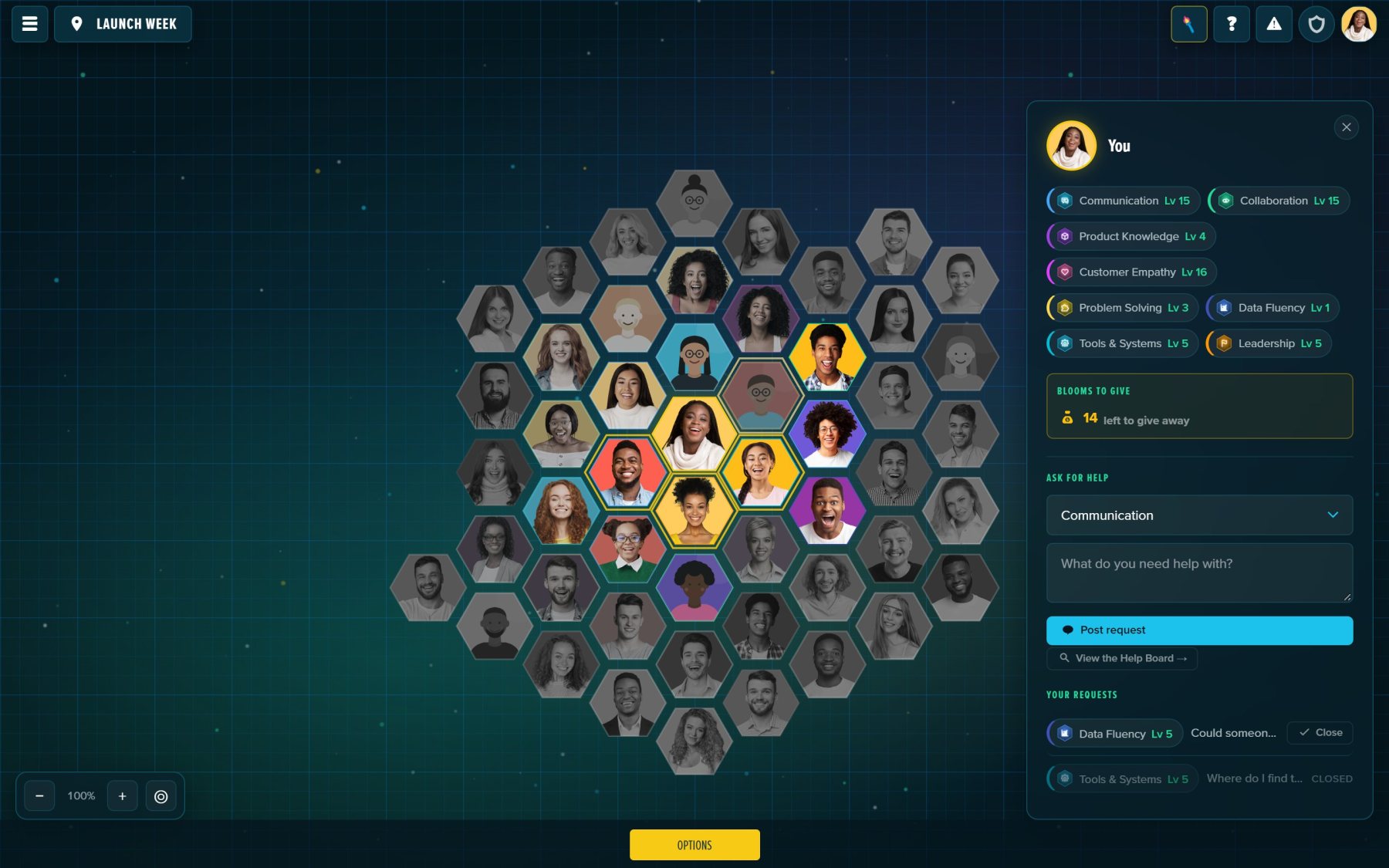
Each of the four visual channels answers exactly one question. None of them is decoration.
A lesson from real data
The backdrop compares you with the average. The first version averaged over every enrolled seat, and since most seats were inactive, every active player looked like a star. Averaging over active players only spread the same people across all four live states. It was one line of SQL, and it decided whether the feature meant anything at all.
| Channel | The Hive, 2021 | The Garden, 2026 |
|---|---|---|
| Color | Endorsements received | Your top skill |
| Position | Recency | Interaction frequency |
| Opacity / brightness | Message intensity | Recency: withers over 60 days |
| Background | (none) | Your standing vs. active players |
Two currencies became one.
The design started with two currencies: Blooms for helping and Roots for asking. On paper it was elegant. In use it was one more thing to explain.
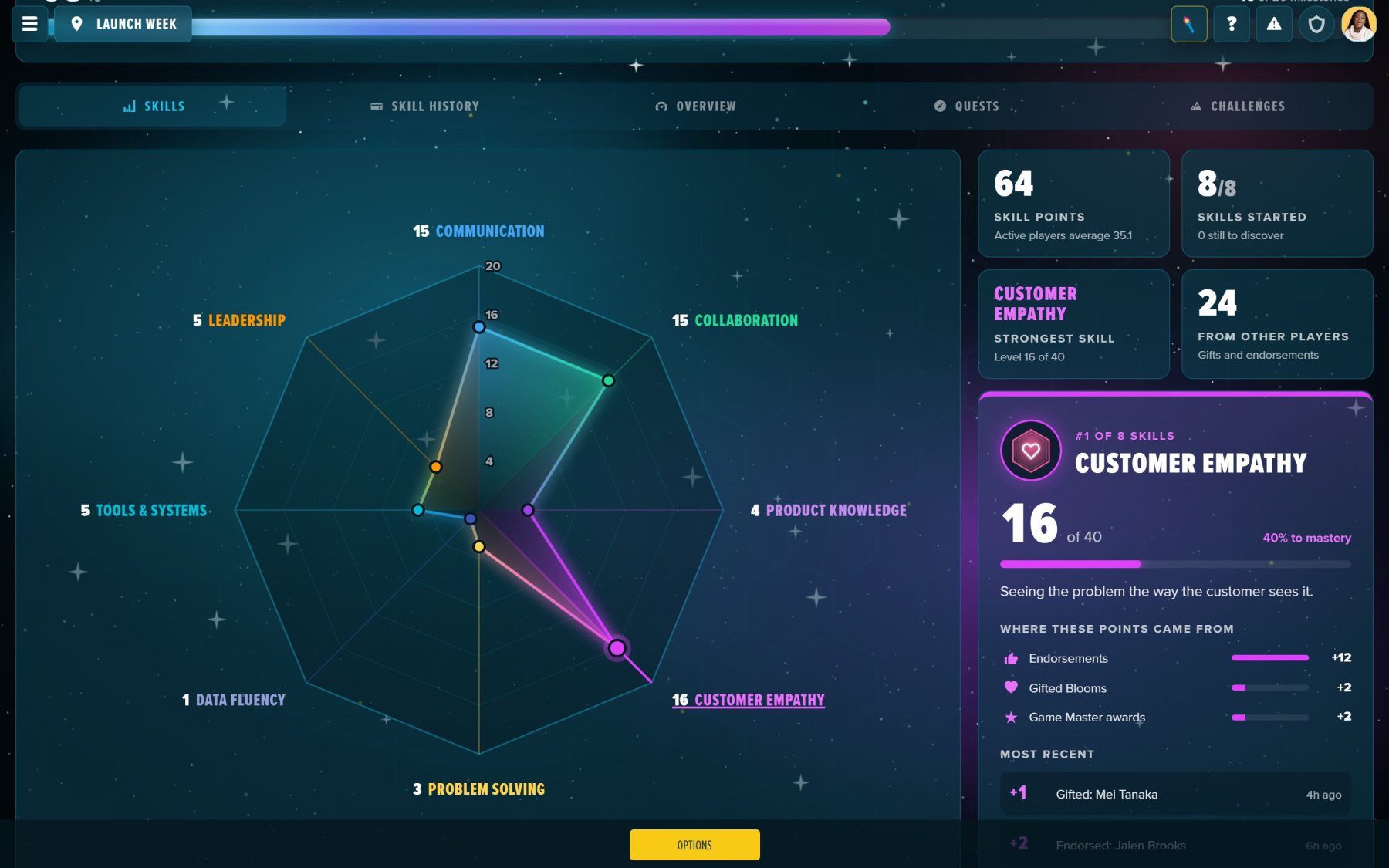
They merged into one: a Bloom is simply a skill point. You earn them from milestones, achievements, Tasks, peers and Game Masters, and each one is always tied to a skill.
You bloom when you help, you root when you ask. Either way, you grow.
From the Garden brief
Scarcity on purpose.
A reward anyone can hand out unlimited times stops meaning anything. Every social action got a cost or a limit that keeps it honest:
- Endorse someone in a skill: +2 Blooms, with a 24-hour cooldown per giver, recipient and skill.
- Gift a Bloom: every player has 20 to give, one at a time, each tied to a skill, each confirmed. Gifting is drawn in amber so it reads as precious.
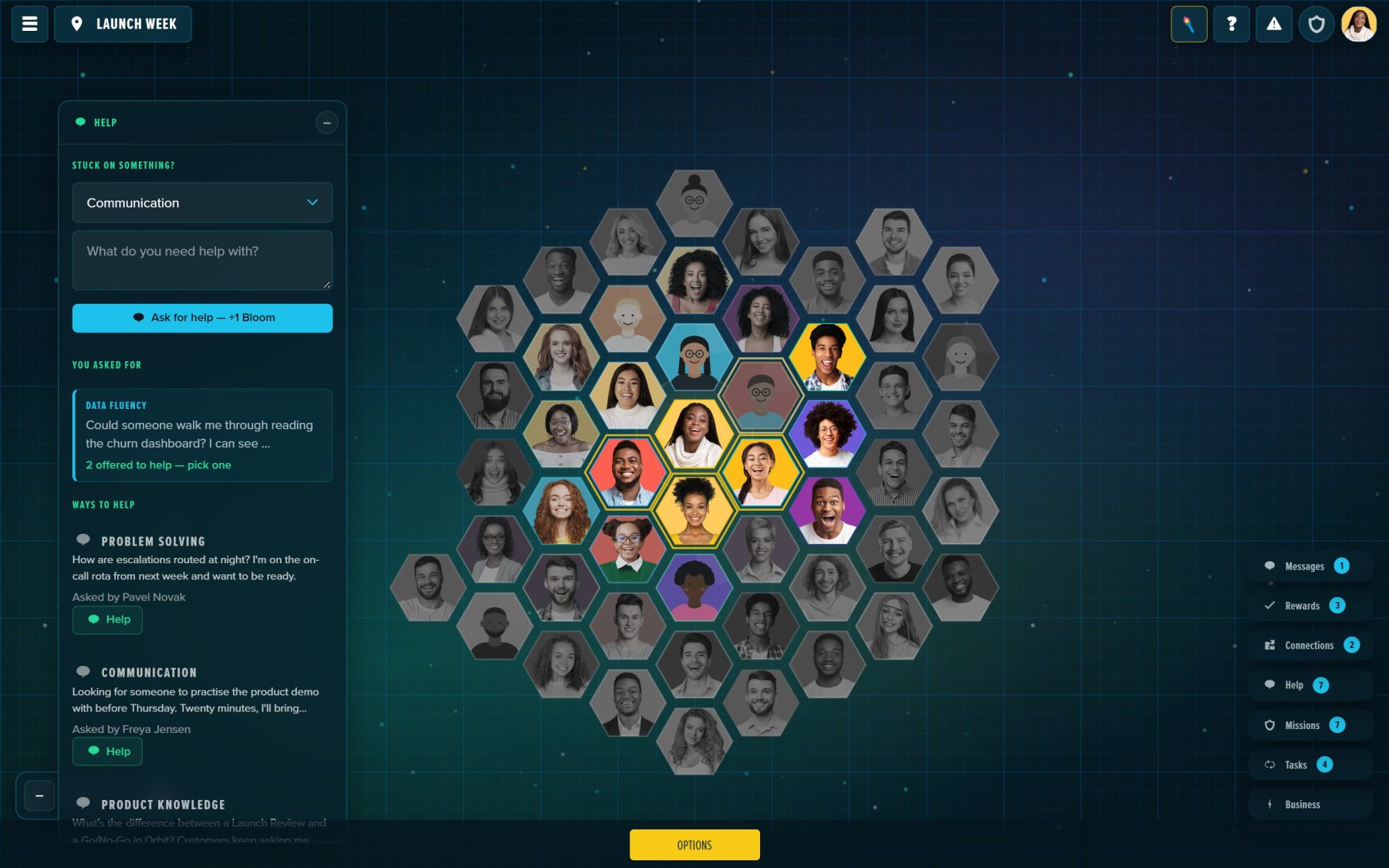
- Ask for help: tag a skill and earn +1 Bloom, once per skill per day. That limit was added on September 14, after testing showed asking could be farmed.
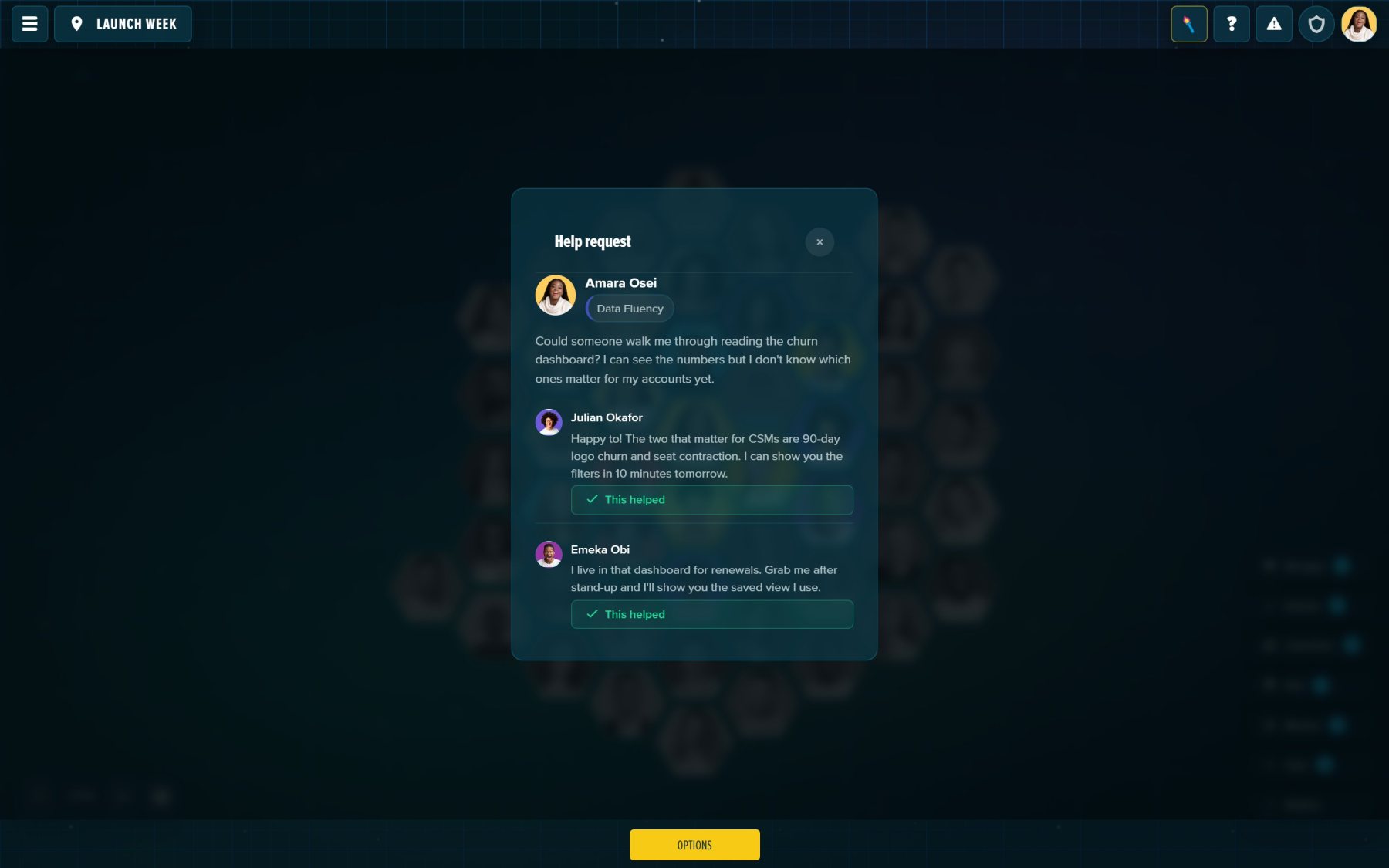
- Give help: the first approved answer closes the request, every approved helper earns +2, and unanswered replies close themselves after 24 hours.
- Claim it: Blooms from missions and solved requests wait in a Rewards inbox until you press Claim. Receiving becomes a moment.
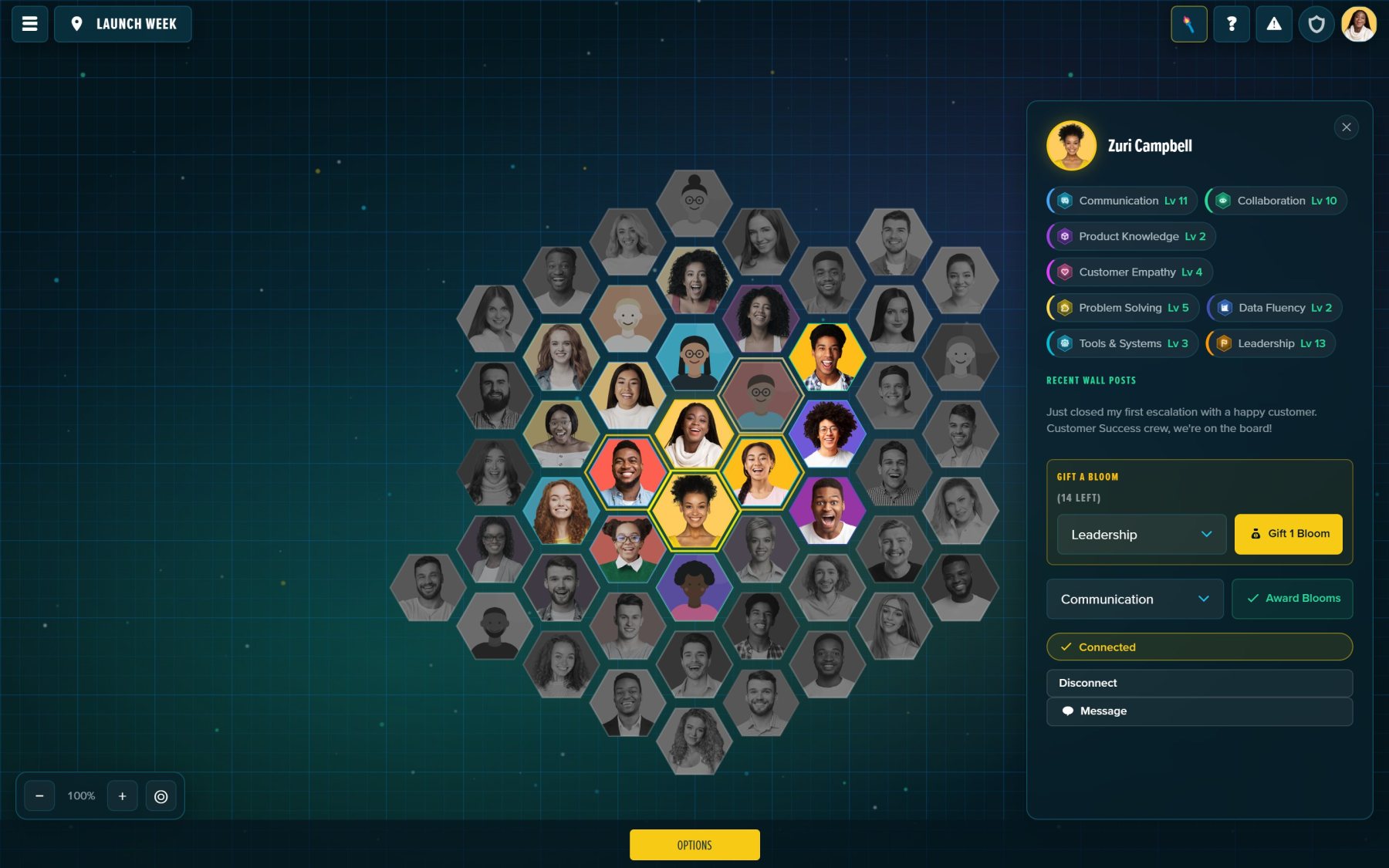
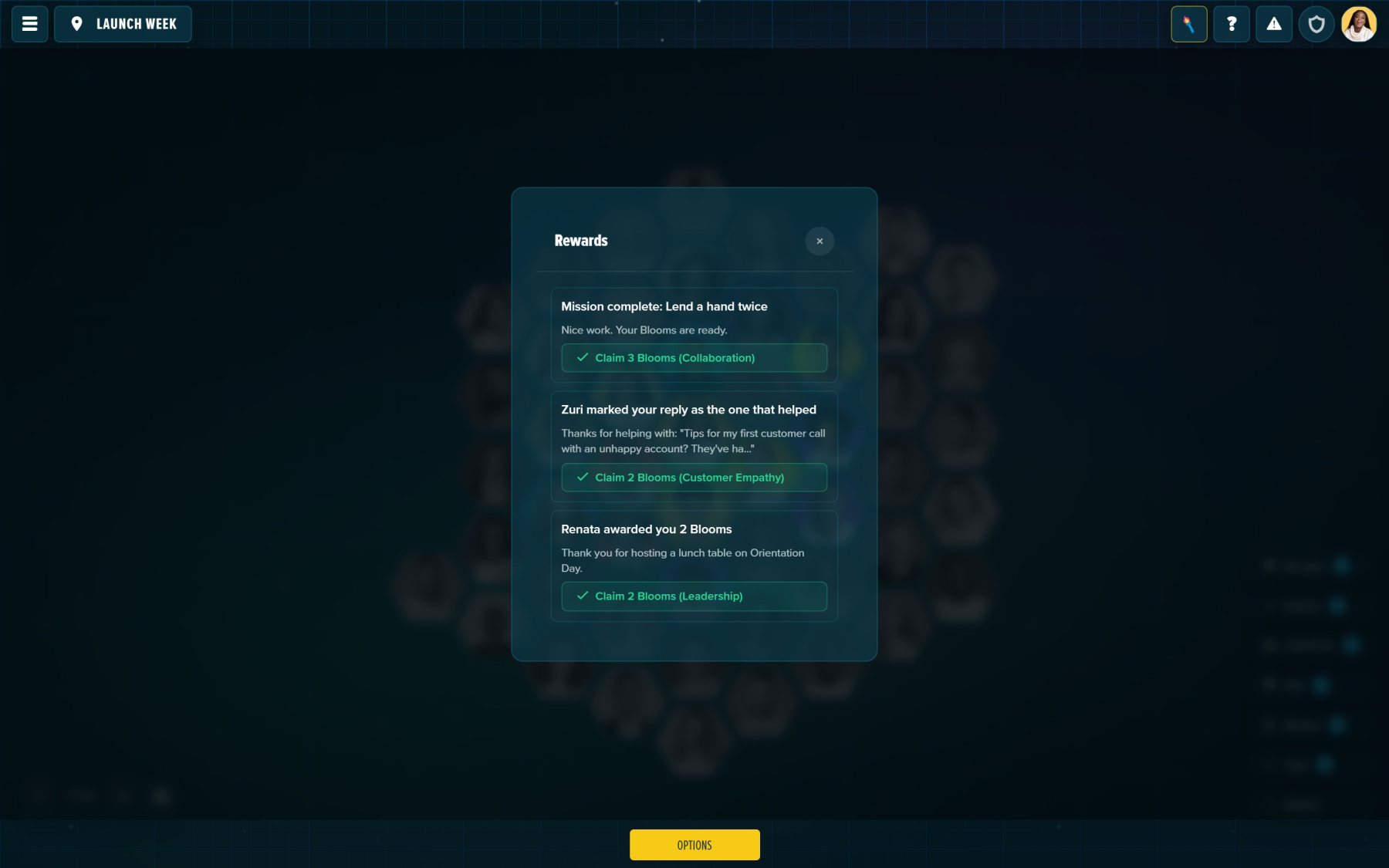
“Helping me is a task. Helping others is a mission.”
That sentence settled a week of back-and-forth about two features that looked the same.
- Once, unlimited, or on a timer
- Triggered manually, by QR scan, by a milestone or by daily login
- Pays XP, BLOO and EP, plus optional Blooms
- The loop that brings you back: your own routine
- Written by the Game Master for everyone, a guild or named players
- Counted automatically across eight actions: message, help, endorse, ask, solve, gift, post, connect
- Rewards go to the inbox, waiting to be claimed
- The loop that brings you back: people counting on you
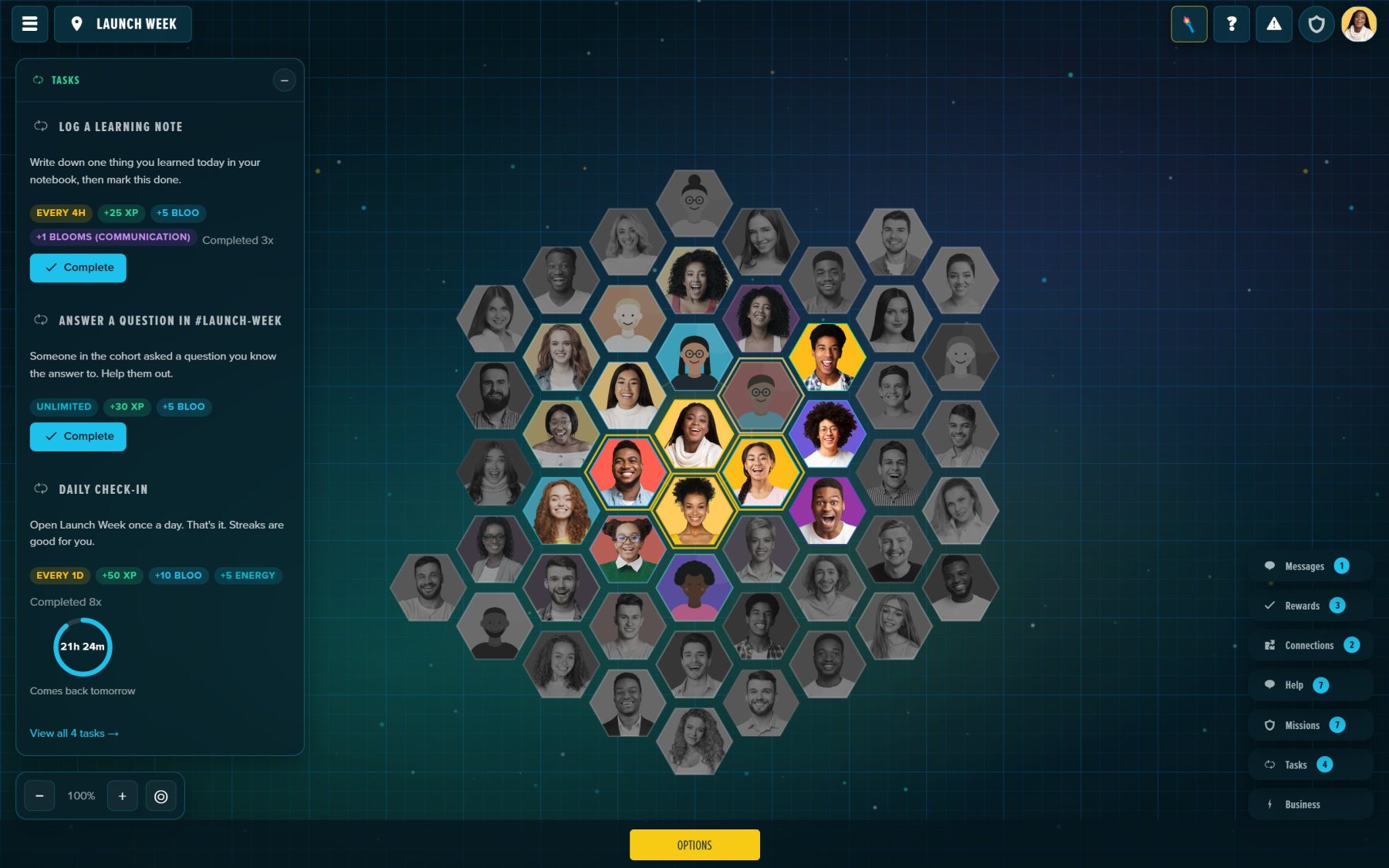
A feature nobody finds doesn't exist.
Before the first real cohort, my worry was simple:
The real risk for Monday is not having a working networking system: ask for help, get help, and an extremely easy way of figuring this out.
My note during the build
So the canvas comes first and every panel starts minimized to a dock. The box for asking for help moved to the top of the Help panel, and a “Ways to help” list shows requests that match your skills first. When testing produced “I can't see any rewards,” the Missions panel started opening on a first visit, but only when it has something in it.
Signals were kept from overloading each other, too. The Connection halo is a second outline rather than a new border color, so it never competes with skill color, and it still fades like everything else.
What shipped, and what's next.
- Jul 17–19Canvas, messages, help and endorsements, Tasks · Dunbar's circles removed
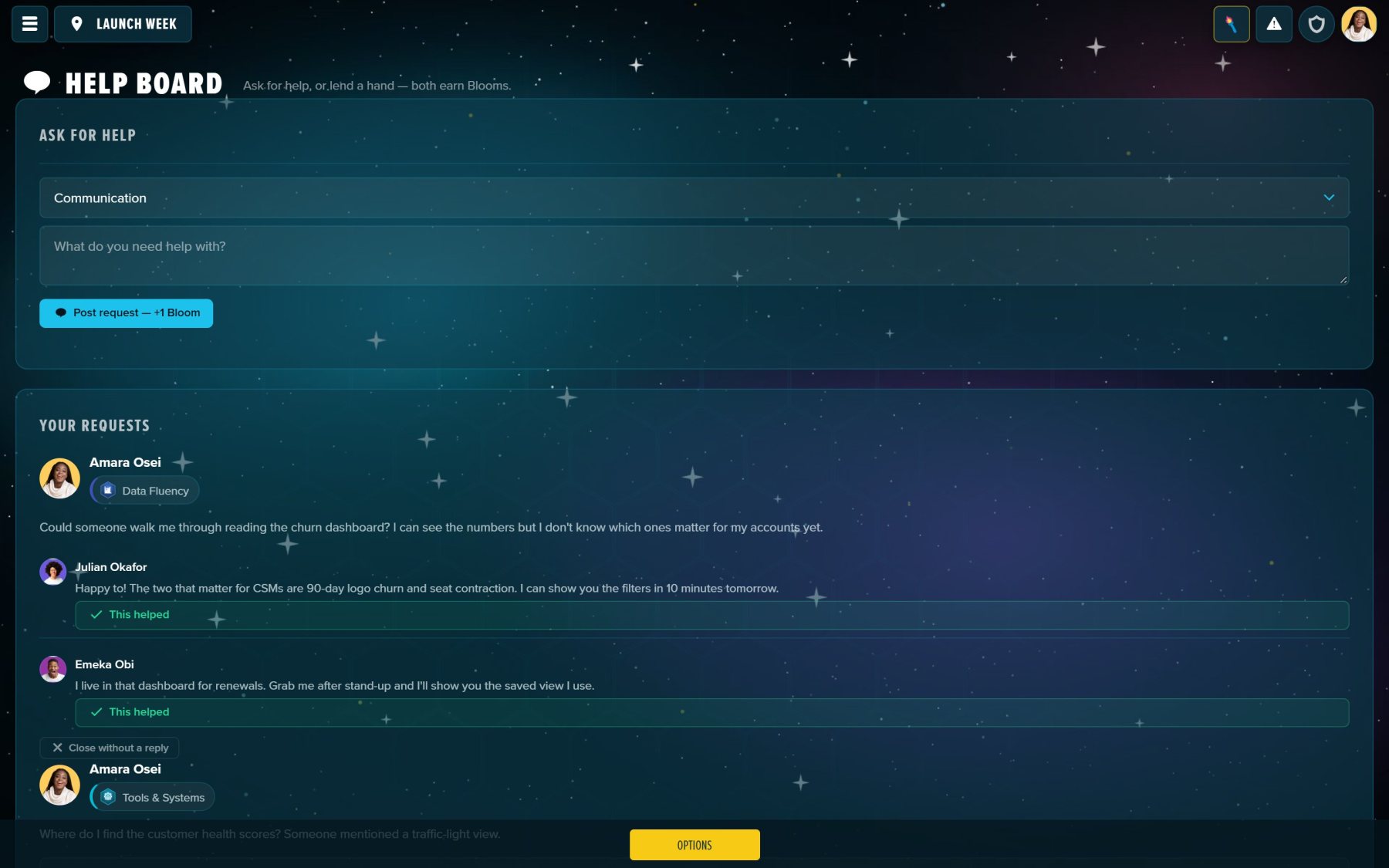
- Jul 28–29Missions, the Rewards inbox, the Help Board, bulk awards, the encoding model, the dock
- Aug 10Grey withering · Gift a Bloom
- Aug 18Blooms can unlock regions of the Journey
- Aug 21Backdrop standing · the 60-day drain · Connections · cursor-anchored zoom
- Sep 8The Garden's interface becomes the whole app's interface
- Sep 18–20Tasks placed on the Journey as hexagons · skills radar in the Journal
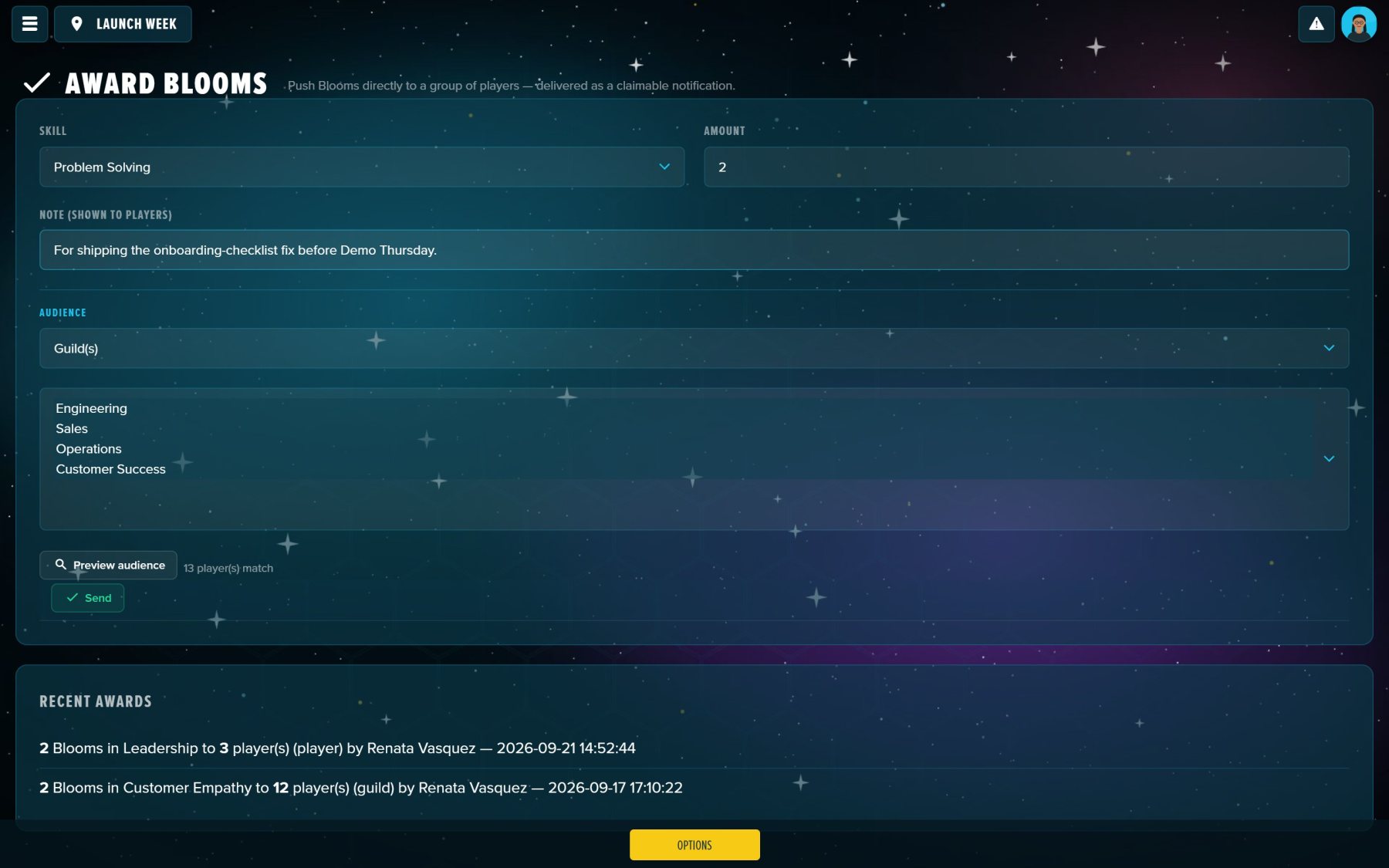
Game Masters got their own tools: a bulk Bloom award by guild, person or HR field with a live “N players match” preview, direct skill grants, and allowance resets.
What isn't built yet, stated plainly: Missions generated automatically from open help requests matched against each player's skills. That's the purest version of the idea, and it's next. After it comes a reconnection rule that nudges you toward the people who have faded.
BLUERABBIT
The platform the Garden lives in, and the twelve-week rebuild behind it.